

It Never Gets Tired. I Do.
On brainstorming with AI when your brain already won't shut up.

My brain got to the charity exhibition before I’d even captured my first screenshot.
That’s not an exaggeration. I’m working on my third masters assignment - a piece about documenting time - and within about forty minutes of deciding to use a wildlife webcam in South Africa, I had already mentally installed the work in a gallery, paired digital stills with hand-painted interpretations, and started wondering which conservation charity the sales should benefit. I hadn’t made anything yet. I hadn’t even worked out what time zone the waterhole was in.
This is just how my brain works. I’m a creative director by trade, which means I’ve spent nearly twenty years (yikes) being paid to have ideas, and the wiring doesn’t switch off just because I’m doing something for myself. New ideas feel good. The dopamine hit of “oh, and then I could...” is genuinely pleasurable. The problem is that it’s also a trap, because chasing that hit can mean you never actually land anywhere long enough to make something real.
Which brings me to ChatGPT, and the reason I’ve been thinking about stop buttons again.
A few weeks ago I wrote about human-AI collaboration and the principle I keep returning to: nothing I ever do should need a big red emergency stop button. That piece was about systems where AI controls physical things - robotics, body-responsive music, anything where a loss of human agency could mean genuine harm. The stop button in that context is reactive. Panicked, even. It’s what you press when things have gone wrong.
But there’s another kind of runaway that doesn’t involve any physical danger at all, and I’ve been experiencing it every time I open a chat window to brainstorm.
Here’s what happened with the webcam project. I told ChatGPT I wanted to capture something over time and document it - referenced Pele Cass’s layered sports photography, mentioned I’d been filming a fire burning, said I had an idea about wilderness webcams. Pretty loose brief. Two starting points, really.
What I got back was extraordinary and also, in hindsight, slightly insane. Six different conceptual approaches to the fire footage alone: one image that holds time, time as colour, flame portraits as a taxonomy, time-slice strips that read like fabric, letting the fire “write” a drawing, audio as a second output. Then three frameworks for how to use AI without it becoming a filter. Then four wilderness variants. Then three screen-based outcomes. Then a full production schedule broken down by day.
All of it genuinely interesting. All of it technically achievable. None of it helping me actually decide what to make.
The thing about ChatGPT is that it’s a collaborator with no internal brake. It will never say “that’s enough options.” It will never tell you that the sixth idea is diluting the first one, or that you should probably just pick something and start. It has the same affliction as my own brain - the endless pursuit of “what if” - except it’s faster, and it doesn’t get tired.
It never gets tired. Ever. It will be just as enthusiastic about option forty-seven as it was about option one, at midnight, on a Sunday, when you should have stopped hours ago.
Meanwhile, I exist somewhere between knackered and an over-excited kid with a new idea. Sometimes both at once. I’m tired and wired, running on fumes and fizzing with possibilities, and the absolute last thing I need is a collaborator who will match my manic energy at 11pm and raise me another six concepts. At some point, a useful creative partner would say “you seem exhausted, maybe sleep on it.” ChatGPT will never say that. It doesn’t know what exhaustion is. It doesn’t know what sleep is. It just keeps going.
For someone already prone to spiralling, this is not straightforwardly helpful.
I did eventually make something. I picked one webcam - a waterhole in Madikwe, night vision, lots of insects drawn to the infrared light. I screen-recorded for an hour, extracted frames, stacked them. The insects left bright streaks across a still landscape. It looked like weather, or interference, or some kind of abstract notation I couldn’t read.
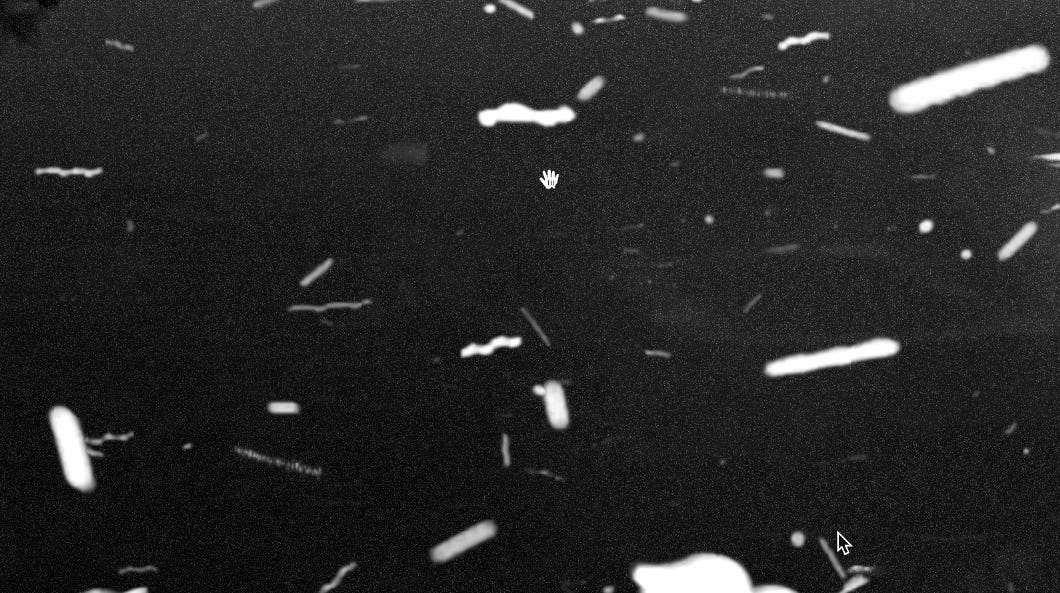
And my gut said: paint it.
Not digitally. Not another filter, not another AI process. Actually paint it, with actual paint, on an actual surface. Take the digital output and put it back in my hands.
ChatGPT hadn’t suggested that. It had been optimising for increasingly sophisticated digital workflows - median backgrounds, difference composites, AI-clustered state grids. The breakthrough wasn’t more options. It was stopping, looking at what I’d made, and responding to it as a human being who also happens to own some brushes.
This is the quieter stop button. Not an emergency brake because things have gone dangerously wrong, but an editorial instinct that says “enough.” Not because the AI has failed, but because you’ve found the thing that makes your gut say yes - and you need to protect it from being optimised into oblivion.
I think this is the real skill of working with generative AI as a creative tool. Not prompt engineering, not knowing which model to use, but knowing when to close the window. Being the creative director of the conversation, which means being the one who decides when the brainstorm is over and the making begins.
Because the tool will never tell you to stop. And if you’re anything like me, neither will your own brain. The discipline has to come from somewhere, and it turns out that somewhere is the same place it’s always been: the gut feeling that says this one, here, now.
The exhibition can wait. The charity partnership can wait. The series of seven waterholes across three continents can definitely wait.
The AI gave me a hundred ways forward. My gut gave me one. I’m going with the gut.
That’s not a rejection of the tool - I’ll be back in that chat window tomorrow, probably with seventeen new questions about aspect ratios or paint surfaces or how to photograph the finished piece. But I’ll also be the one who decides when the conversation is over. The one who closes the window. The one who says enough, I have what I need, now I make.
That’s the stop button. It was never in the software. It’s in me.